Unravelling the stem and early evolution of elasmobranchs
- Grant DOI: 10.55776/PAT1454425
- Start: September 1, 2025
- End: August 31, 2029
Principal Investigator (PI)

Dr. Manuel Amadori
ORCID: 0000-0002-8163-9396
ResearchGate
Collaborators
- Dr. Eduardo Villalobos-Segura (University of Vienna, Austria)
- Univ.-Prof. Dr. J. Kriwet (University of Vienna, Austria)
- Univ.-Prof. Dr. Alexander O. Ivanov (St. Petersburg State University, Russia)
- Univ.-Prof. Dr. Gilles Cuny (Claude Bernard University Lyon 1, France)
Wider research context/theoretical framework
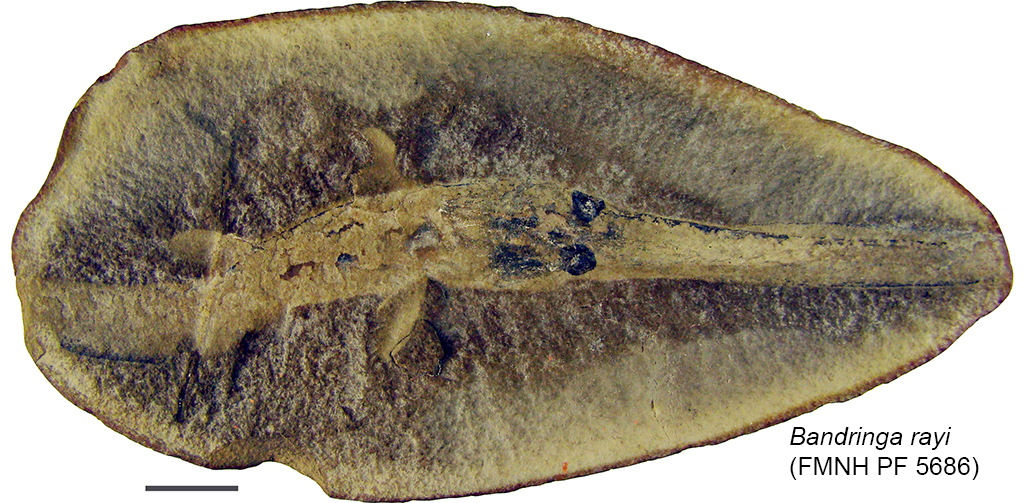
The focus of this project is on possible stem group elasmobranch candidates and early crown group members. Elasmobranchs (sharks, rays and skates), together with chimaeras, represents the main extant groups of cartilaginous fishes nowadays. Elasmobranchs are among the oldest surviving vertebrate groups with one of the most exceptional evolutionary histories. Possible stem elasmobranchs already occurred 419-359 million years ago. Later, they underwent a diversification process starting in the Triassic and reaching its maximum in the Cretaceous. A subsequent gradual drop in their biodiversity characterizes the Mesozoic-Cenozoic transition with a decline that continues today. Clarifying the timing and patterns of elasmobranch evolution has been hampered by decades of conflicting interpretations on the identity stem members and their dynamics with the crown group. Those are currently controversial and actual subject of debate. In this perspective, palaeobiological studies are fundamental to clarifying phylogenetic patterns and establishing the wider, natural context in which to frame extant forms. Our understanding of the times, modes and patterns of evolution of early elasmobranchs can therefore benefit greatly from basic research that focuses on fossil taxa including stem members.
Research questions
The overall aim of this project is to identify stem group elasmobranch fishes and to clarify the early evolution of total group elasmobranchs. The research questions for this study are: 1) What is the stem group of elasmobranchs composed of? 2) When did elasmobranchs originate? 3) How diverse were stem elasmobranchs? 4) What is the mode and tempo of stem and early crown elasmobranch evolution? 5) Are elasmobranch tooth traits useful for phylogenetic studies?
Methods
To answer these questions, a multidisciplinary approach involving various methodologies and data sets based on life traits from fossil and extant taxa will be employed. Unambiguous morphological and histological traits will be established to investigate the relationships between stem and crown group members. The age estimation of stem elasmobranchs will provide insights about the timing of their origin and early diversification. Possible advantages in using tooth traits for assessing the elasmobranch evolution will be established through the study of both articulated remains and isolated teeth. The key tasks for this project are identifying the taxonomic composition of stem elasmobranchs, producing dated phylogenetic tree for elasmobranch members, analysing the phenotypic variation and assessing the taxonomic and phylogenetic diversity of stem elasmobranchs. Clear innovative aspects of this project lay in the use of a combination of traditional and advanced approaches for non-invasively collecting anatomical traits normally not accessible without destructive methodologies and for investigating the early elasmobranch evolution.
Level of originality/innovation
Clear innovative aspects of this project lay in the use of a combination of traditional and advanced approaches for non-invasively collecting anatomical traits normally not accessible without destructive methodologies and for investigating the early elasmobranch evolution.